

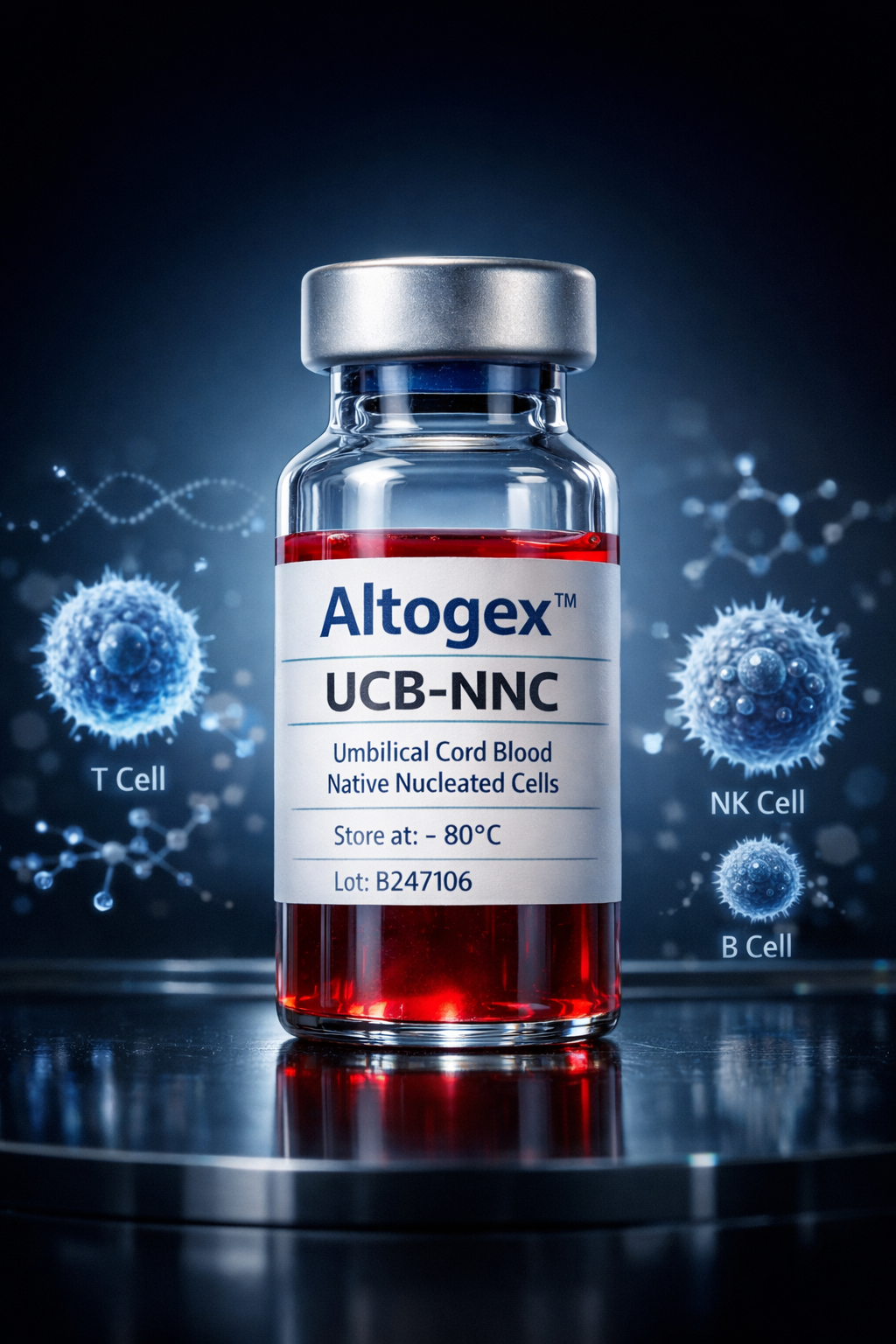
Altogex™
Umbilical Cord blood Native Nucleated cells (UCB-NNC)
Human cord blood native nucleated cells (HCBNNCs) are separated from umbilical cord blood using a proprietary protocol. HCBNNCs are screened for the expression of immune marker CD45, and their viability is assessed using Acridine Orange or DAPI staining and our state-of-the-art, fully automated cell counting machine. This highly purified population of cells makes it possible to further isolate specific and rarer populations, as well as additional downstream processes.
The Altogex™ fraction is a result of a validated technology composed of lymphocytes (T cells, B cells, and natural killer cells), monocytes, dendritic cells, and stem/progenitor cells. These cells are important cellular components of the immune system and are essential in effective humoral and cell-mediated immune responses.
Altogex contains T regulatory cells, natural killer cells, hematopoietic stem cells (HSCs), mesenchymal stem cells (MSCs), epithelial stem cells (ESCs), and endothelial stem cells (ENSCs). MUSE cells, very small embryonic-like cells (VSEL). These cells have broad regenerative capacity and immunomodulatory properties that have been shown to be beneficial. In a variety of in a variety of disease states.
Human cord blood includes many types of immune cells and is considered a rich source of hematopoietic stem and progenitor cells. The collection of cord blood is a non-invasive and painless procedure performed at one of our partnering recovery agencies by trained procurement staff. Maternal blood for the fresh whole cord blood is obtained and must test negative for HIV, HBV, HCV, CMV, Syphilis, WNV, HTLV I/II Ab, Chagas, and Lyme Disease. The blood is then transferred to our cell manufacturing facility where specific primary cells are processed, analyzed, and vialed. Cellular characteristics, such as phenotype, viability, purity, and cell count, are checked to meet rigorous federal standards to ensure high-quality cells have been obtained.
| Weight | 1 lbs |
|---|---|
| Size | 1cc ( 6 Million), 2cc ( 12 Million ), 3cc and 5cc (30 Million) |
| Manufacturer | Altogex Biotech |
| U/M | 1cc ( 6 Million), 2cc ( 12 Million ), 3cc and 5cc (30 Million) |
| Storage | Sterile Vial |
| Shipping Temp/Condition | Frozen ( -81 celcius) |
| Storage Temp | (-80 celcius or lower) |
| Media Expiry, 4C | N/A |
| Media Expiry, -20C | N/A |
| Preservative | DMSO (5%) |