

CytoCord™
Mesenchymal stem cells are adult stem cells that can be isolated from various sources. These sources include adipose tissue, the umbilical cord, and bone marrow. Purified MSCs exhibit a phenotype similar to fibroblast and differentiate based on the site of origin. For example, an MSC isolated from the bone marrow will differentiate into bone marrow-related cells. MSCs are able to repair injured tissues and may be important in immunomodulation, making them valuable in both basic science and translational studies.
The technology behind Cytocord™ has been validated to deliver the highest purity and quality to ensure your research protocols are reliable.
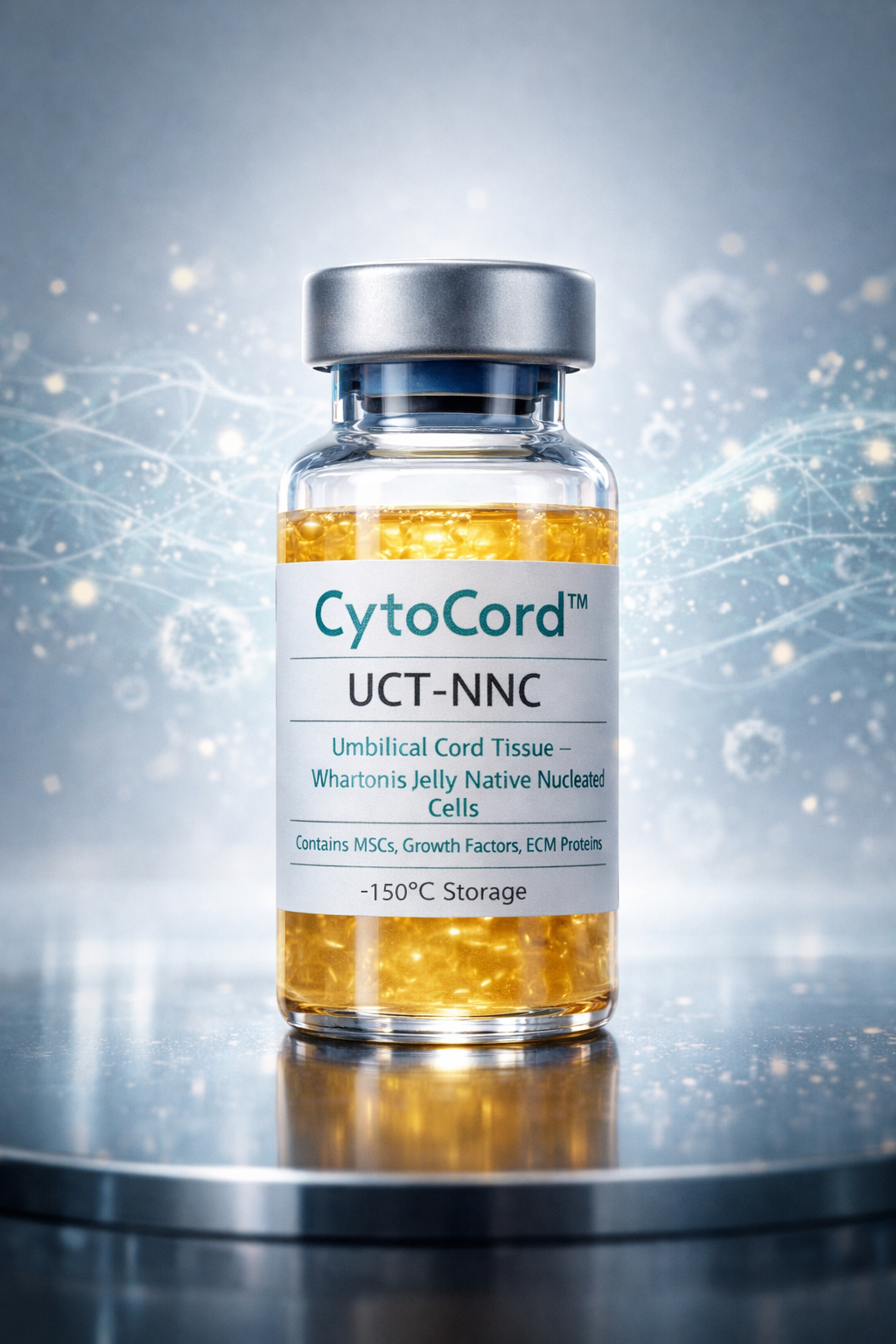
Cytocord™ is a secretome-based product that contains collagen, elastin, and hyaluronic acid.
Umbilical Cord Matrix/Wharton’s Jelly Nucleated Native product contains both growth factors and an assortment of cell types, including mesenchymal stem cells, epithelial cells, and endothelial cells. These cell types can secrete anti-inflammatory and immunomodulatory properties that can then be optimized to reach your clinical research needs.
All donors go through a rigorous screening process, as determined by the guidelines and regulations listed by the FDA and the American Association of Tissue Banks (AATB). Maternal blood for the fresh umbilical cord tissue must be negative for HIV (Human Immunodeficiency Virus), HBV (Hepatitis B), HCV (Hepatitis C), CMV IgM (cytomegalovirus antibodies), Syphilis, WNV (West Nile Virus), HTLV I/II (Human T-Cell Lymphotropic Virus Types I and II), and Chagas Disease. The consented umbilical cord ships to our cell manufacturing facility where primary cells are processed and analyzed. Parameters including cell phenotype, viability, purity, and cell count are checked to meet the FDA’s gold standard for biopharma companies, ensuring high-quality cells are characterized and purified.
The umbilical cord matrix does not express HLA-DR, therefore, it is immune privileged.
| Weight | 1 lbs |
|---|---|
| Size | 0.5 cc (1 Million), 1cc (2 Milion), 2cc ( 3 Million ) |
| Manufacturer | Novoxa |
| Storage | Sterile Vial |
| U/M | 0.5 cc (1 Million) , 1cc (2 Milion) , 2cc ( 3 Million ) |
| Shipping Temp/Condition | Frozen |
| Storage Temp | Frozen |
| Media Expiry, 4C | N/A |
| Media Expiry, -20C | N/A |
| Preservative | DMSO (5%) |